15. India – Monsooned Malabar
The coffee comes from highland estates in southern India, particularly the Western Ghats, where coffee has been grown for centuries. Indian coffee history is traditionally linked to Baba Budan, who is said to have brought coffee seeds to India after travelling from Yemen in the seventeenth century. Commercial coffee cultivation expanded much more significantly under British rule during the nineteenth century.
Monsooned Malabar, however, owes its distinctive character to something completely different: the old sea journey from India to Europe. Before the Suez Canal and modern shipping, coffee travelled for months around the Cape of Good Hope in wooden sailing ships. Stored below deck, the beans were exposed to humid maritime air for four to six months. During that journey they absorbed moisture, became larger and paler and lost much of their original acidity.
European buyers became accustomed to the unusual flavour. When faster shipping eventually stopped the beans changing during transit, customers noticed. Indian producers therefore developed a way to recreate the old voyage on land.
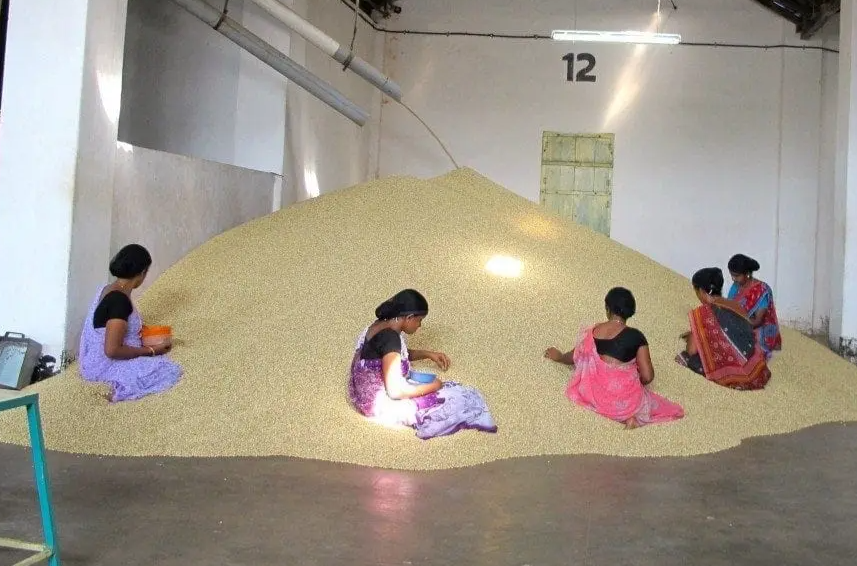
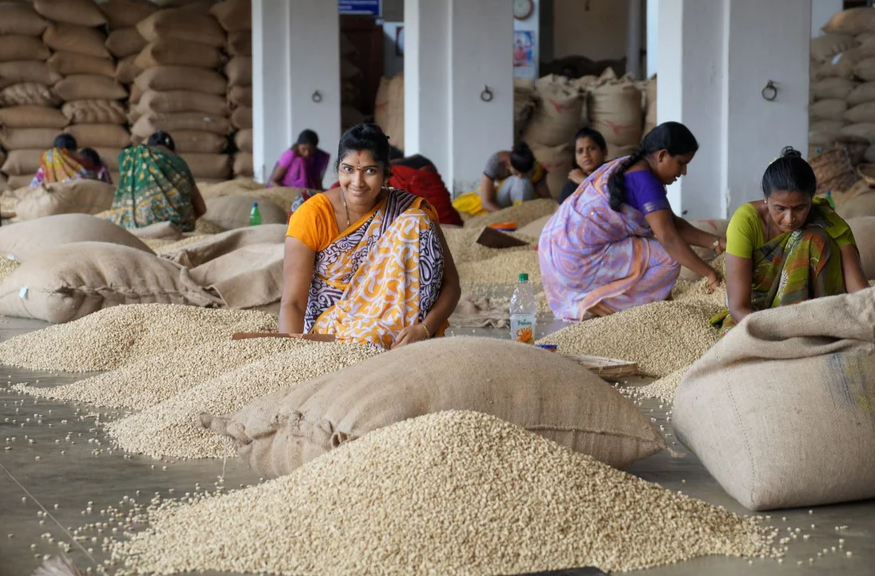
During India’s south west monsoon, usually between June and September, natural processed Arabica is spread in layers around four to six inches deep inside large, well ventilated warehouses on the country’s western coast. Warm, moisture laden air from the Arabian Sea passes through the buildings. The coffee is repeatedly raked, turned, bulked and rebagged so that exposure remains even. The process takes approximately 12 to 16 weeks.
During this time the coffee changes dramatically. The beans can swell to almost twice their original size, while their colour changes from green to pale gold or light brown. The process also transforms the flavour, dramatically reducing acidity while increasing body and bringing forward earthy, spicy characteristics.
Once monsooning is complete, the coffee is graded again and moved to a drier area for storage. It is one of the most unusual examples in the calendar of processing completely transforming what coffee tastes like