
Day 5. Mandheling Tekengon
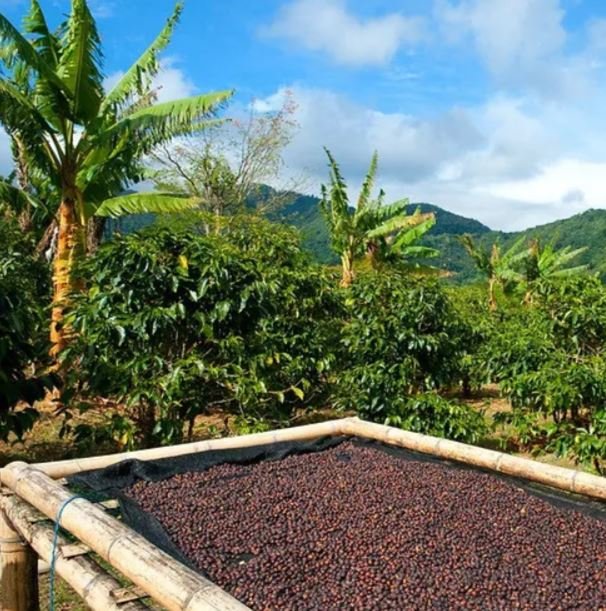
Indonesia’s islands were formed by ancient volcanic activity, leaving behind dramatic mountains and rich, fertile soils that are ideal for growing coffee. Across the Malay Archipelago, from Sumatra and Java to Sulawesi, coffee has become an important part of both landscape and culture. Although only around 15% of Indonesia’s production is Arabica, these Arabica coffees are some of the most recognisable in the world.
Sumatra Mandheling is grown on the volcanic slopes of Mount Leuser, near the port of Padang in west-central Sumatra. This region is known for its deep, mineral-rich soils and humid tropical climate conditions that help shape Sumatra’s signature cup profile: full-bodied, earthy and complex.
What makes Sumatran coffee truly unique is its traditional processing method, known as giling basah or wet-hulling. Unlike most origins, where the parchment is removed at around 10–12% moisture content, Sumatran producers hull the coffee much earlier, at around 50% moisture. This unusual step creates the characteristic heavy body, herbal nuances and spicy finish that define classic Mandheling coffees, and also gives the green beans their distinctive blue-green hue. Grade 1 “Triple-Picked” lots, like this coffee are hand-sorted three times to remove defects, ensuring exceptional consistency and clarity in the cup.
Coffee farming on Sumatra is dominated by smallholders, typically working plots of between 0.5 and 2.5 hectares. Coffee is often grown alongside vegetables, fruit and other crops that support family livelihoods throughout the year. Many farmers also supplement their income by working seasonally on nearby tea plantations once the coffee harvest ends.
Increasingly, farmers across Sumatra are organising into cooperatives to improve quality, share resources and gain better bargaining power. These co-ops provide training, technical support and improved post-harvest infrastructure, helping producers achieve higher prices and more stable income.
In the Kerinci region, for example, the Koerintji Barokah Bersama cooperative sits at the foot of Mount Kerinci — another volcano in the Pacific Ring of Fire. Here, fertile volcanic soils, shifting mountain weather and careful processing come together to produce complex, fruit-forward coffees. Many lots undergo innovative anaerobic fermentation, where carefully selected cherries are sealed in airtight bags and left to ferment in cool conditions before being dried on raised beds. This combination of tradition and innovation is helping redefine what Indonesian coffee can be.
Across the island, the result of all this work is a coffee deeply shaped by its landscape and its people: bold, distinctive and layered, with herbal, spicy and fruit-toned notes and a richness that’s unmistakably Sumatran.